













Schmidt Institute of the Physics of the Earth Russian Academy of Sciencies
Moscow, Russian Federation
Moscow, Russian Federation
Dear Colleagues,
March 19, 2026 marked the 95th anniversary of the birth of the outstanding Soviet and Russian geophysicist, seismologist, and volcanologist Dr. Sergey A. Fedotov, full member of the Russian Academy of Sciences. He was a brilliant researcher and science organizer who made an enormous contribution to the study of the nature of seismicity and catastrophic earthquakes, the physics of volcanic and magmatic phenomena, and their relationship with deep geodynamic processes.
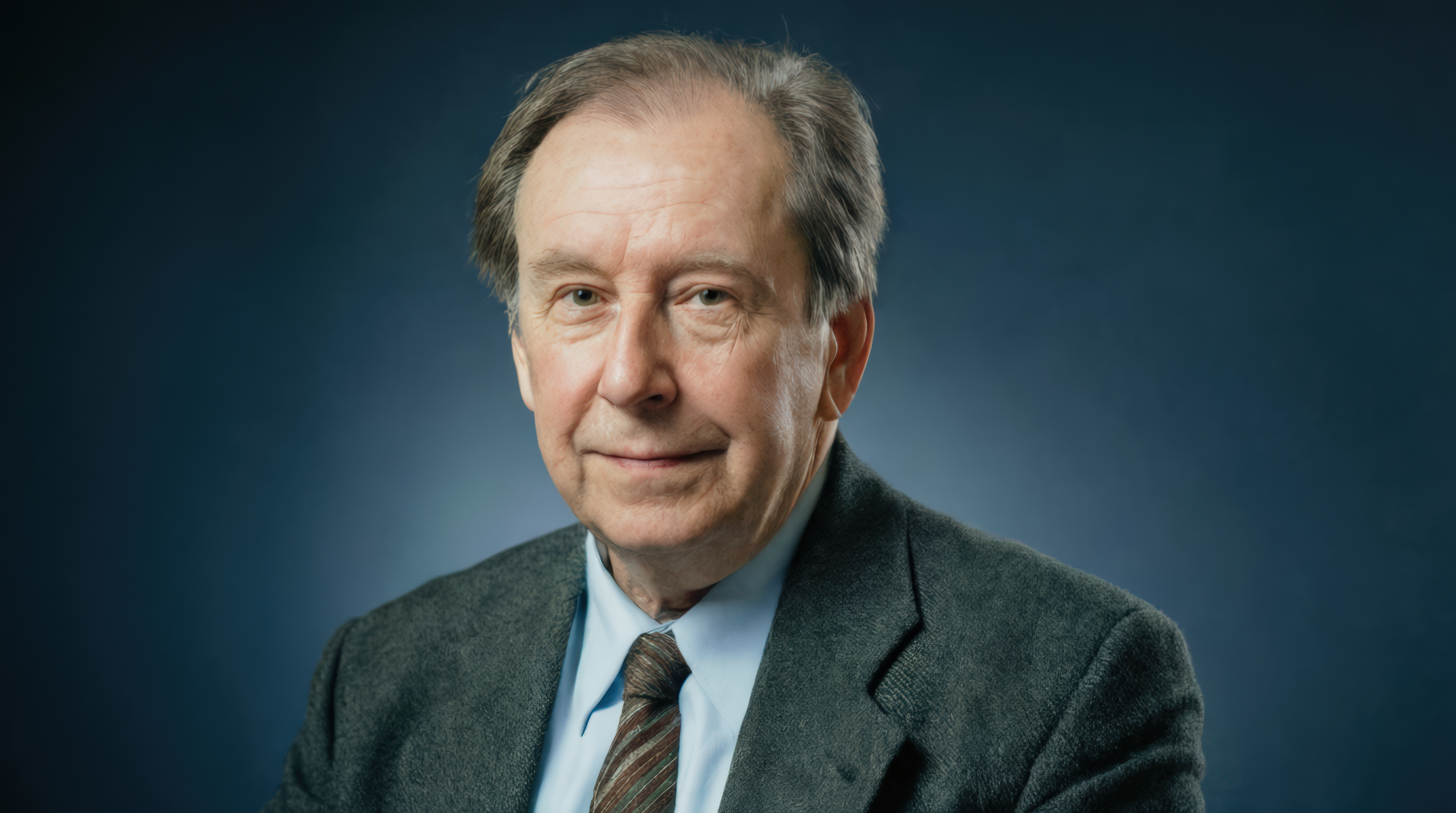
Dr. Sergey A. Fedotov, Corresponding Member of the USSR Academy of Sciences, Full Member of the Russian Academy of Sciences
The completion of S. A. Fedotov’s postgraduate studies at the Institute of Physics of the Earth of the USSR Academy of Sciences practically coincided with the beginning of the International Geophysical Year in 1957. Within the framework of this program, the young scientist was assigned to establish a seismic network on the southern Kuril Islands. He accomplished this task brilliantly. In the subsequent years (1959–1970), S. A. Fedotov headed the Pacific Seismic Expedition of the Institute of Physics of the Earth of the USSR Academy of Sciences. Later, after being elected the corresponding member of the USSR Academy of Sciences, he permanently connected his life with Kamchatka, serving as Director of the Institute of Volcanology and Seismology of the Far Eastern Branch of the Russian Academy of Sciences for more than 30 years (1971–2003). S. A. Fedotov’s works on the mechanics of magma feeding systems of volcanoes, the physics of volcanic eruptions, and the structure of the upper mantle of the Kuril–Kamchatka region gained wide international recognition and are among the foundational works on modern geophysics. Of particular note here is the detailed study of the Great Tolbachik Fissure Eruption of 1975–1976.
S. A. Fedotov’s contribution to the development of seismology and Earth physics received high state recognition. He was awarded the Soviet Orders of the October Revolution and the Red Banner of Labour, Russian Order of Honour and Order “For Merit to the Fatherland” IV class, and numerous other awards. S. A. Fedotov’s exceptional services to volcanology were recognized by his election as President of the International Association of Volcanology and Chemistry of the Earth’s Interior (IAVCEI) and his tenure in this post in 1979–1983.
A major scientific achievement of S. A. Fedotov was the development of the concept of “seismic gaps” and, on this basis, the creation of a method for long-term prediction of strong earthquakes for the Kuril–Kamchatka region. Through immense perseverance and a strong power of persuasion, S. A. Fedotov secured the approval of government decisions on ensuring seismic safety and retrofitting of buildings and structures in PetropavlovskKamchatsky and a number of other communities in the region. Later in life, S. A. Fedotov regarded this very endeavor as the main outcome of his life.
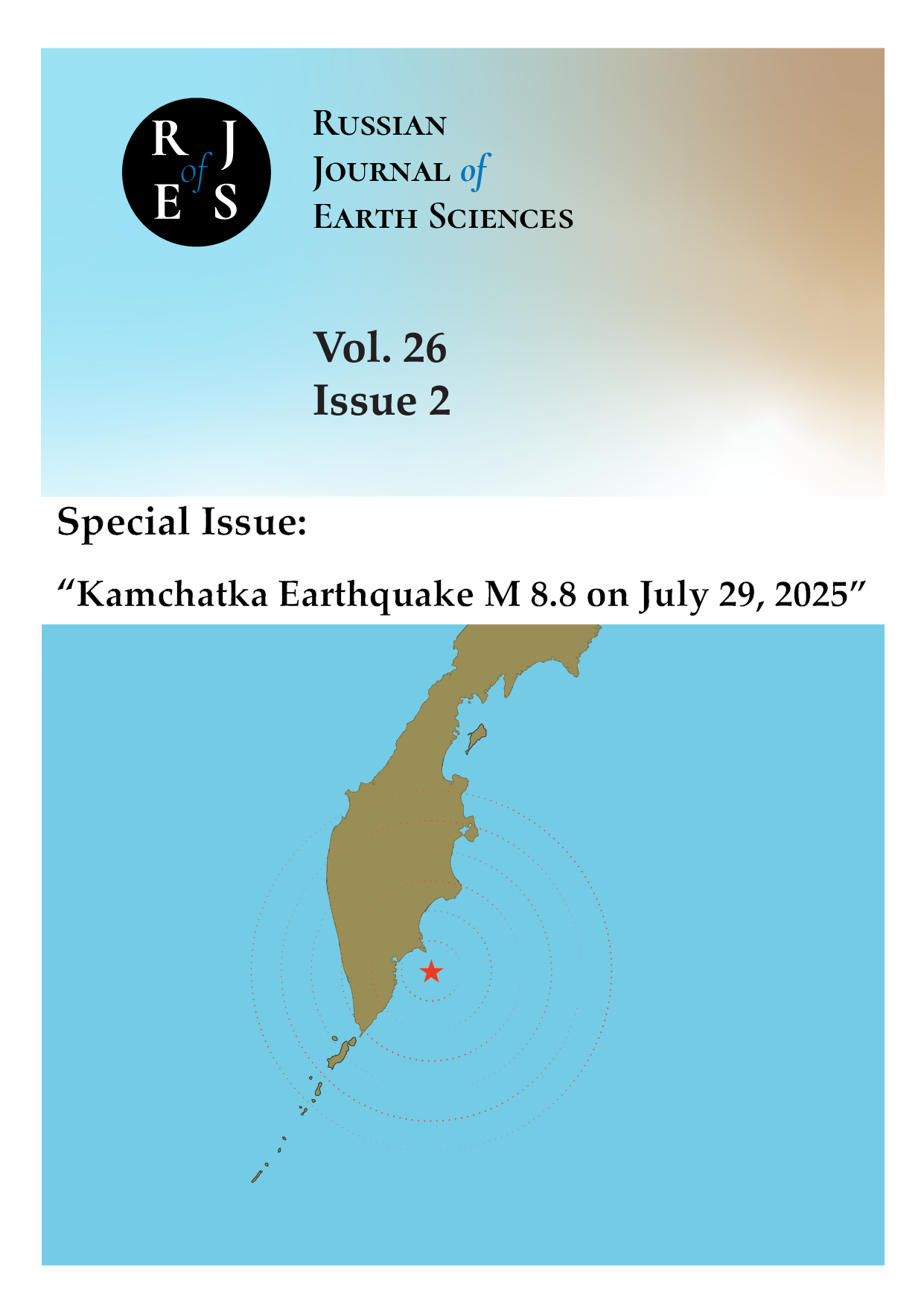
The Editorial Board of the Russian Journal of Earth Sciences dedicates this special issue to the Kamchatka earthquake and also pays tribute to the memory of Dr. S. A. Fedotov and his noble scientific and civic activities aimed at reducing seismic risk and saving lives. The choice of the topic for this issue aligns perfectly with the dedication: the strongest earthquake that occurred on July 29, 2025, confirmed S. A. Fedotov’s scientific concept and his predictions. The data collected on this event to date, along with their analysis, comprise the core scientific results that form the subject matter of this special journal issue.
The high scientific standard of this volume is a reflection of its authors. The papers have been contributed by leading specialists from the relevant institutes of the Russian Academy of Sciences, universities, and research centers from various regions of Russia as well as from abroad (USA). It is especially worth noting that among the authors of the special issue are members of the Russian Academy of Sciences: four full members, three corresponding members, and one professor of the RAS. The academic reputation of these and other authors within the scientific community has ensured the fundamental nature and relevance of the presented studies.
The volume opens with a review paper devoted to S. A. Fedotov’s outstanding contribution to long-term earthquake prediction. The main content of the issue is divided into two thematic sections.
The first section, Seismological and Geodynamic Studies, focuses on seismological and geodynamic research. It examines in detail the concept of “seismic gaps” using the Kamchatka megathrust earthquake as an example, analyzes the processes of elastic strain accumulation and pre-seismic anomalies (based on the joint use of InSAR and GNSS data). A substantial part of the papers is devoted to refinement of source parameters, estimation of the seismic moment (MW 8.8–8.9), assessment of the stress–strain state of the lithosphere, as well as the study of the response of geofluid systems and the specific features of engineering seismometric monitoring during the preparation and occurrence of the main shock and its strongest aftershocks.
The second section, Geomagnetic and Space Weather Studies, reflects current research on coupling within the Lithosphere–Atmosphere–Ionosphere system. It summarizes results of studies of anomalous changes in ionospheric parameters caused both by seismic waves from the earthquake and by tsunamigenic gravity waves. The analysis presented is based on an integrated approach including data from satellite navigation systems, vertical incidence sounding methods, and specialized ionograms. This makes it possible to take a fresh look at ionospheric precursors and co-seismic responses.
We hope that the results of this special issue will serve as a tribute to the memory of the outstanding scientist and will find both theoretical and practical application in seismic hazard assessment and the mitigation of natural risks. Furthermore, they are of fundamental importance for ensuring the safety of both the Kuril–Kamchatka region and earthquake-prone territories around the world.